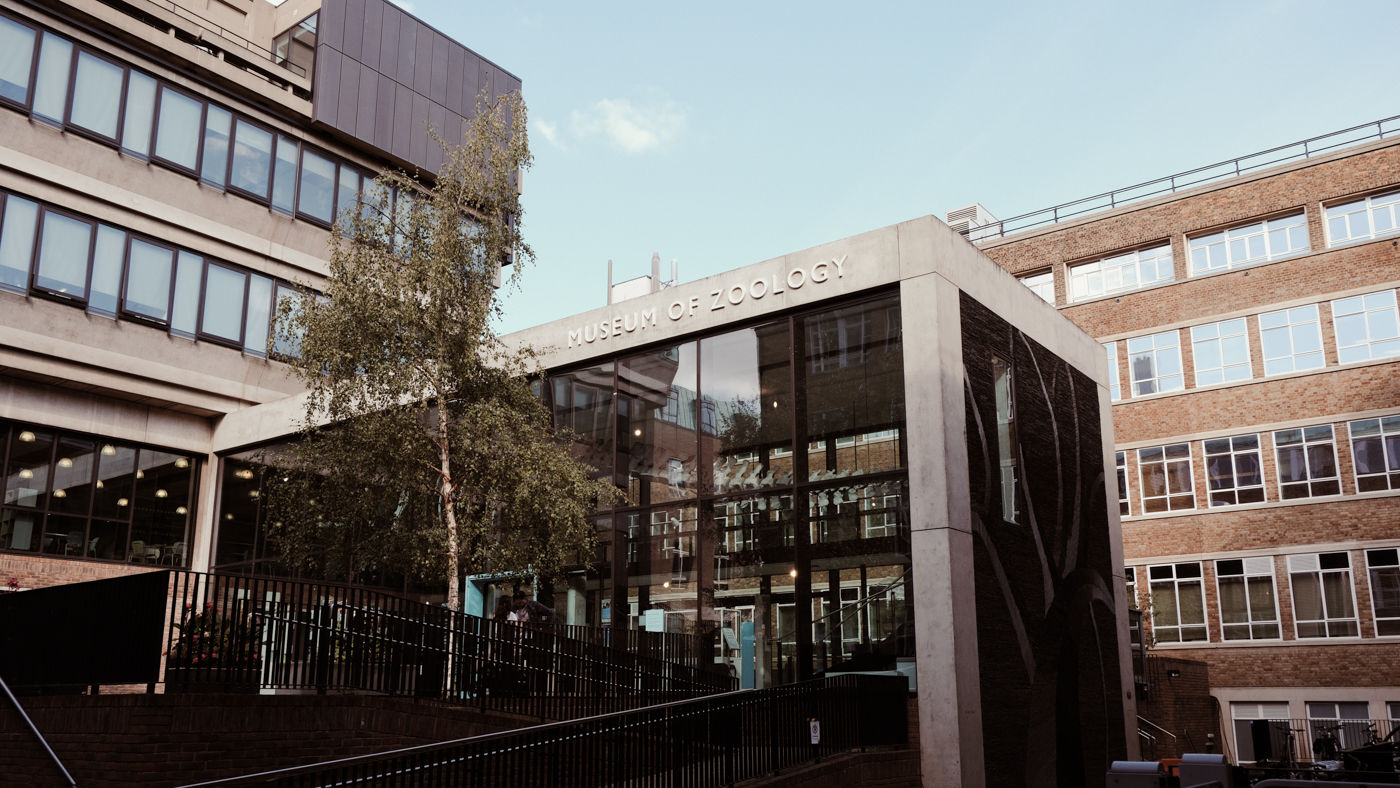
Operated by the University Department of Zoology, this institution serves dual roles as an active research facility and public museum. The collection’s origins were humble—simple teaching specimens for zoology students—but it has since grown into a remarkable archive of nearly two million items, among them Darwin-era specimens and the famous naturalist’s personal beetle collection.
A Journey Through Evolution
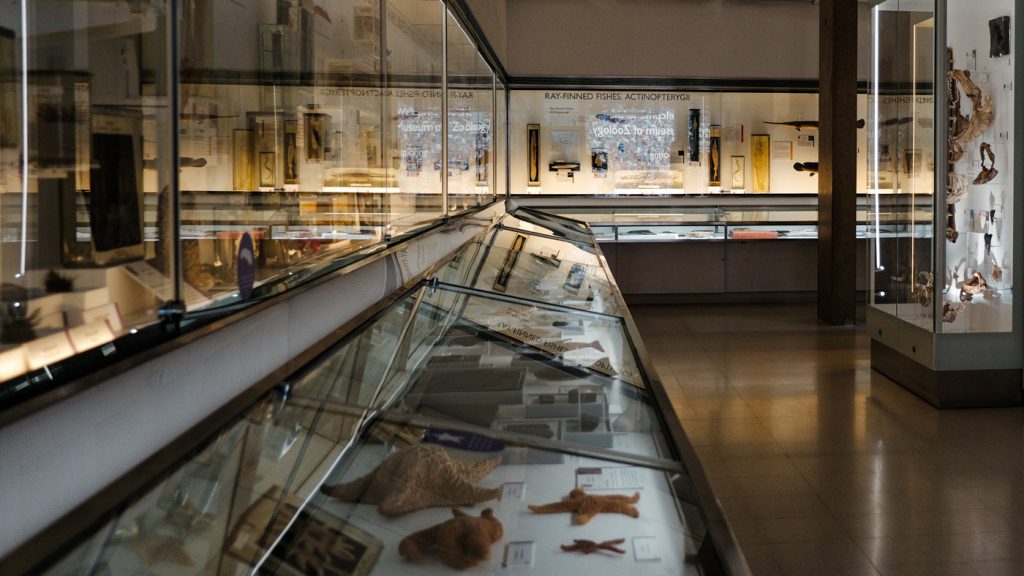
The museum’s collection follows a chronological journey through the animal kingdom, displaying fossils, organisms, and specimens that trace evolutionary development over millions of years. Glass cabinets line the walls, filled with carefully preserved biological specimens that tell stories of adaptation and survival. Above, skeletons hang suspended from the ceilings, creating a dramatic canopy of bones. The ground floor showcases impressive full animal skeletons, from towering mammals to ancient creatures. Through regular exhibits focused on zoology and evolution, visitors can explore the incredible diversity of wildlife, from the simplest organisms to the largest mammals.
Collection Highlights
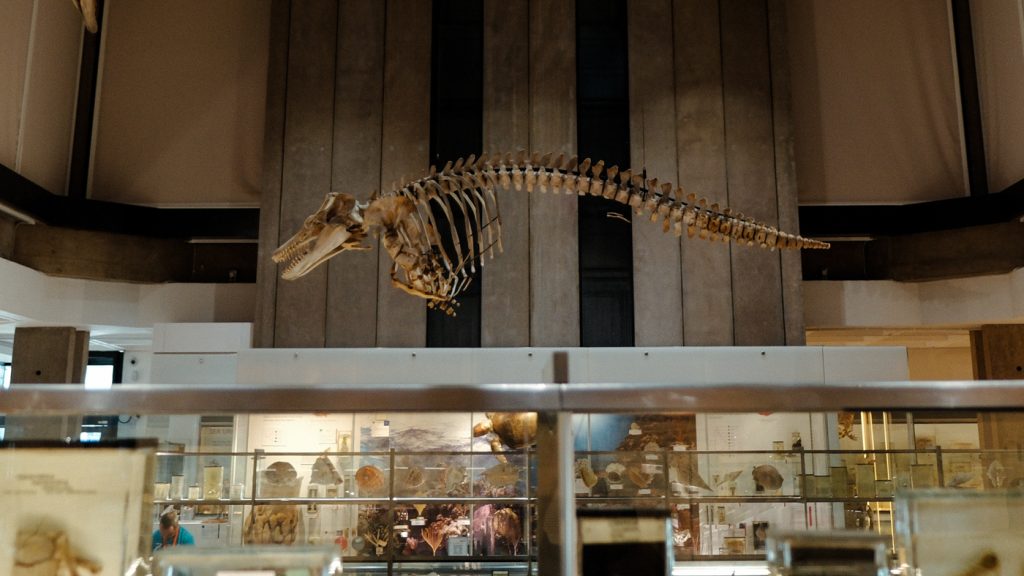
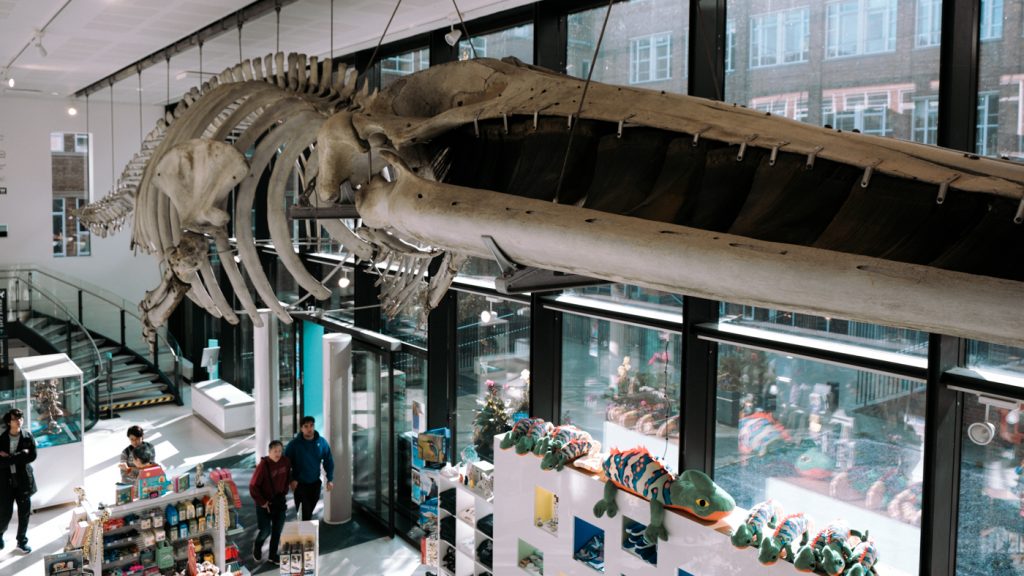
The museum houses an extraordinary array of specimens that tell stories across geological time. From the extinct dodo and dinosaur fossils to Darwin’s personal beetle box, each piece carries scientific and historical weight. Modern marvels like the Komodo dragon specimen sit alongside ancient treasures such as an ichthyosaur over 150 million years old. Pop culture intersects with natural history through the nine-foot-tall Asian elephant featured in 2001: A Space Odyssey. A 21-metre fin whale hangs majestically above the entrance, setting the stage for the museum’s pièce de résistance: a giant blue whale skeleton that commands the central hall.
Visitor Notes
With explorer bags, interactive activities, and engaging displays throughout, the museum is thoughtfully designed for families and aims to inspire the next generation of biologists. However, parents should be aware that some of the striking and unusual historical specimens, particularly preserved animals, might disturb younger or more sensitive children.
Whale Cafe and Gift Shop
The museum shop offers an excellent range of educational games, toys, and science-inspired keepsakes perfect for budding naturalists. For a quieter moment, retreat to the upstairs whale café area where you’ll find comfortable seating and a peaceful atmosphere. Set aside 1–2 hours to appreciate the full collection, or opt for a condensed 30-minute walkthrough.
Directions & Opening Hours
Conveniently located just off Downing Street, the museum is part of a cluster that makes for an excellent museum-hopping day. Directly across the road, you’ll find two complementary institutions—the Sedgwick Museum and the Museum of Archaeology and Anthropology—all within easy walking distance of each other
Opening Times
Monday: Closed
Tuesday – Saturday: 10:00 AM – 4:30 PM
Sunday: 12:00 PM – 4:30 PM
Tickets:
Free
Address:
David Attenborough Building, Downing Street, Cambridge, CB2 3EJ