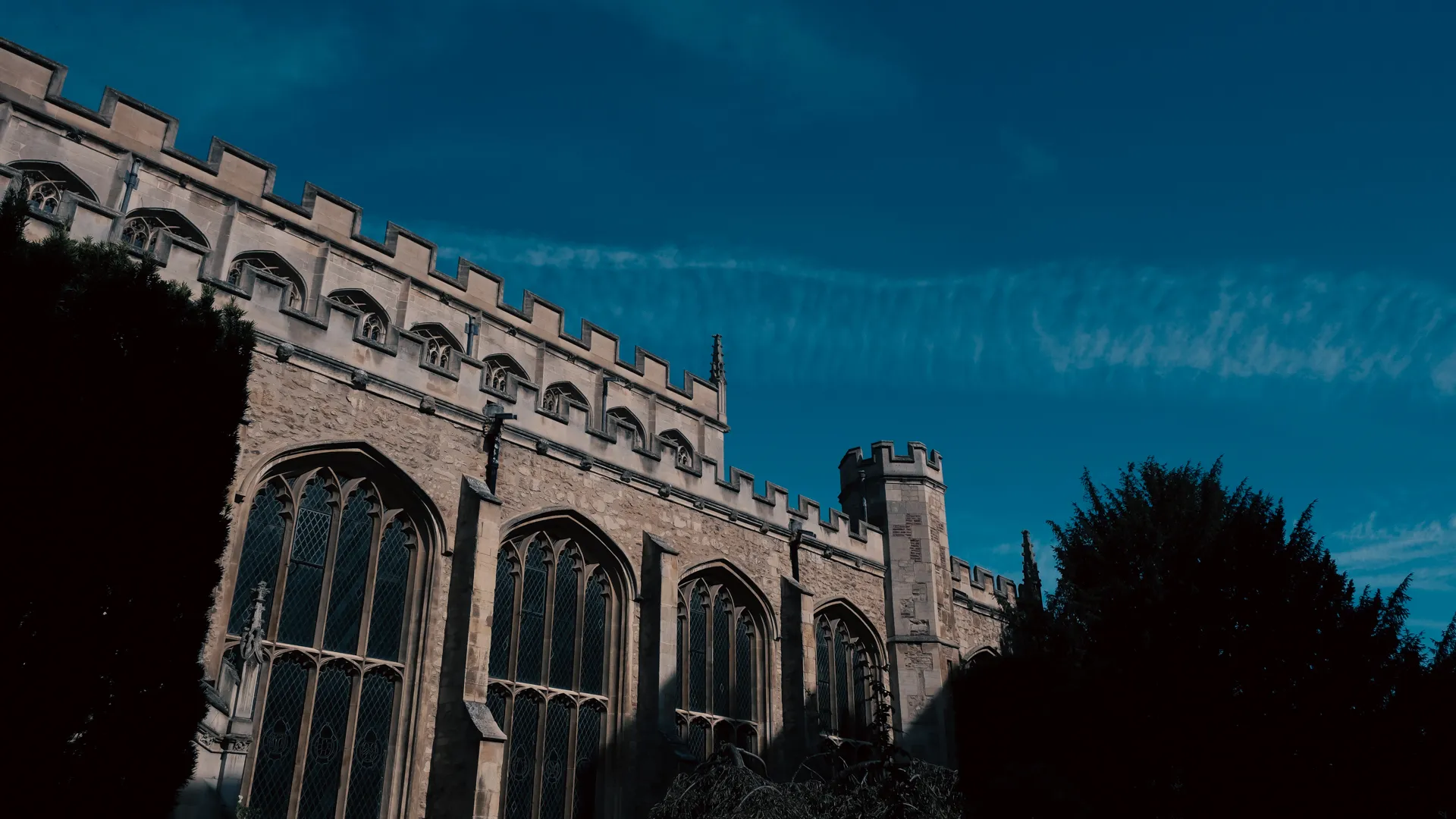
Historic Buildings Great Saint Mary's Church

Key Information

In the heart of Cambridge, opposite the famous market square and nestled among centuries-old colleges, stands Great St Mary’s Church — a striking landmark known for its beautiful architecture and panoramic tower views. Whether you’re seeking history, scenery, or a peaceful spot to reflect, this church is a must-see stop on any Cambridge itinerary.

Price

Free

Main Feature: The Tower and Views of Cambridge

The church’s most popular feature is its 114-step tower, which offers breathtaking 360-degree views over Cambridge. From the top, visitors can spot landmarks such as King’s College Chapel, the River Cam, and the university’s historic buildings. It’s especially captivating at sunset or in the spring when the city is in full bloom.

History and General Information

Great St Mary’s has been the University Church since 1209, making it a spiritual and ceremonial hub of Cambridge for over 800 years. Rebuilt in the late 15th and early 16th centuries in the Perpendicular Gothic style, the church has hosted countless university sermons, debates, and events. Its bells, rung regularly, are some of the heaviest and most famous in the area. Inside, you’ll find grand stained-glass windows, a fine organ, and peaceful spaces for contemplation.

Opening Times and Getting Here

Great St Mary’s Church is typically open daily to visitors, with the tower accessible from late morning to late afternoon. Opening hours may vary with services or weather, so it’s best to check the church’s website before visiting.
Located in the city centre, it’s just a 10-minute walk from Cambridge train station or easily reachable by bus, bike, or on foot from anywhere in town.

What’s Nearby

Surrounded by colleges and the bustling market square, the church is at the core of Cambridge sightseeing. Nearby, you can visit King’s College Chapel, take a punting tour on the River Cam, or explore the Fitzwilliam Museum. Quaint cafés and bookshops also line the surrounding streets — perfect for a relaxed post-visit stroll.

In Summary

Great St Mary’s Church is more than a place of worship — it’s a gateway to the story of Cambridge itself. With its panoramic tower, historical importance, and central location, it’s a must-visit destination that offers both inspiration and insight into the heart of this iconic university town.

Contact

  • Email office@gsm.cam.ac.uk

  • Phone Number +44 (0)1223 741716

Open Hours

  • Monday - Satuday 10:00 am - 5:30 pm

  • Sunday 12:00 pm - 5:00 pm

Directions

The University Church

  • Senate House Hill

  • Cambridge

  • CB2 3PQ

More Attractions

  • Great Saint Mary's

Operated by the University Department of Zoology, this institution serves dual roles as an active research facility and public museum. The collection's origins were humble—simple teaching specimens for zoology students—but it has since grown into a remarkable archive of nearly two million items, among them Darwin-era specimens and the famous naturalist's personal beetle collection.

A Journey Through Evolution

The museum's collection follows a chronological journey through the animal kingdom, displaying fossils, organisms, and specimens that trace evolutionary development over millions of years. Glass cabinets line the walls, filled with carefully preserved biological specimens that tell stories of adaptation and survival. Above, skeletons hang suspended from the ceilings, creating a dramatic canopy of bones. The ground floor showcases impressive full animal skeletons, from towering mammals to ancient creatures. Through regular exhibits focused on zoology and evolution, visitors can explore the incredible diversity of wildlife, from the simplest organisms to the largest mammals.

Collection Highlights

The museum houses an extraordinary array of specimens that tell stories across geological time. From the extinct dodo and dinosaur fossils to Darwin's personal beetle box, each piece carries scientific and historical weight. Modern marvels like the Komodo dragon specimen sit alongside ancient treasures such as an ichthyosaur over 150 million years old. Pop culture intersects with natural history through the nine-foot-tall Asian elephant featured in 2001: A Space Odyssey. A 21-metre fin whale hangs majestically above the entrance, setting the stage for the museum's pièce de résistance: a giant blue whale skeleton that commands the central hall.

Visitor Notes

With explorer bags, interactive activities, and engaging displays throughout, the museum is thoughtfully designed for families and aims to inspire the next generation of biologists. However, parents should be aware that some of the striking and unusual historical specimens, particularly preserved animals, might disturb younger or more sensitive children. 

Whale Cafe and Gift Shop

The museum shop offers an excellent range of educational games, toys, and science-inspired keepsakes perfect for budding naturalists. For a quieter moment, retreat to the upstairs whale café area where you'll find comfortable seating and a peaceful atmosphere. Set aside 1–2 hours to appreciate the full collection, or opt for a condensed 30-minute walkthrough.

Directions & Opening Hours

Conveniently located just off Downing Street, the museum is part of a cluster that makes for an excellent museum-hopping day. Directly across the road, you'll find two complementary institutions—the Sedgwick Museum and the Museum of Archaeology and Anthropology—all within easy walking distance of each other

Opening Times

Monday: Closed 

Tuesday – Saturday: 10:00 AM – 4:30 PM 

Sunday: 12:00 PM – 4:30 PM

Tickets: 

Free

Address:

David Attenborough Building, Downing Street, Cambridge, CB2 3EJ

Visit their website for further information

[post_title] => University Museum Of Zoology [post_excerpt] => Explore the remarkable diversity of animal life at the University Museum of Zoology's newly revamped galleries. Encounter creatures from moths to monkeys and mammoths to manatees, while uncovering fascinating tales of extinction, survival, evolution, and discovery. [post_status] => publish [comment_status] => closed [ping_status] => closed [post_password] => [post_name] => university-museum-of-zoology [to_ping] => [pinged] => [post_modified] => 2026-02-13 23:03:24 [post_modified_gmt] => 2026-02-13 23:03:24 [post_content_filtered] => [post_parent] => 0 [guid] => http://remember-cambridge.local/?post_type=attraction&p=625 [menu_order] => 0 [post_type] => attraction [post_mime_type] => [comment_count] => 0 [filter] => raw ) 1 -->
  • University Museum Of Zoology

Discovering a Creative Escape in Cambridge

Kettle’s Yard is a modern and contemporary art gallery and historic house in Cambridge, forming part of the University of Cambridge. The site combines free changing exhibitions with a preserved domestic art collection, offering an alternative to the traditional museum experience. Its programme focuses on early 20th-century Modernist art, with particular attention to British artists. Today, the gallery is directed by Andrew Nairne.

Origins and Vision

Kettles Yard Gallery White Wall

Kettle’s Yard began as the home of Jim Ede, a former Tate Gallery curator active during the 1920s and 1930s. In 1956, Ede transformed four small workers’ cottages into a living exhibition space designed to integrate art into daily life. He opened the house each evening to students, personally guiding visitors through the collection in an informal setting.

Ede described the house as a living place where works of art could be enjoyed without the austerity of a museum. He and his wife lived among the artworks for ten years before donating the property to the University of Cambridge in 1966. A purpose-built Modernist exhibition gallery was later added in 1970, expanding public access while preserving the character of the original home.

Atmosphere and Experience

The experience at Kettle’s Yard remains intentionally intimate. Visitors move through domestic rooms rather than formal galleries, encountering artworks placed alongside furniture, plants, stones, and natural objects. The arrangement encourages slow observation and quiet contemplation.

Entry to the house is limited to small timed groups, and spaces can feel compact. This constraint contributes to the atmosphere, reinforcing the sense of entering a lived-in artistic environment rather than a conventional museum.

Permanent Collection

The permanent collection includes paintings, sculpture, furniture, glass, and carefully selected natural materials arranged throughout the house. Works by artists such as Barbara Hepworth, Henry Moore, Joan Miró, Constantin Brâncuși, and Henri Gaudier-Brzeska are displayed as part of everyday living spaces rather than isolated exhibits. The presentation reflects Jim Ede’s belief that art should coexist naturally with daily life.

Exhibitions, Events, and Learning

Alongside the historic house, the exhibition galleries host a rotating programme of contemporary shows featuring both emerging and established artists. Concerts and live performances continue Ede’s belief in the relationship between music and visual art.

A four-floor education wing supports public engagement through talks, workshops, and learning programmes aimed at widening access to modern art. Regular family activities and creative sessions make the gallery accessible to younger visitors.

Visitor Information

Entry to the exhibition galleries is free, while access to the house requires a timed ticket. Visits take place at set intervals with small guided groups to preserve the atmosphere and protect the collection. General admission costs £10 with an optional £2 donation, while under-25s and University of Cambridge students enter free.

Last entry is at 4pm. The gallery is closed on Mondays and typically open Tuesday to Sunday from 1:30pm to 4:00pm. Due to limited space, large bags are not permitted inside the house.

Café and Facilities

An on-site café provides a relaxed setting for refreshments after exploring the galleries. Offering solid food and drink options, it serves as a natural pause point and a calm conclusion to the visit.

Nearby Places to Explore

Kettles Yard Gallery Church

Kettle’s Yard sits close to several historic and cultural landmarks, including Castle Hill and the Museum of Cambridge. Visitors can continue towards Jesus Green or the Quayside, both popular areas for riverside walks and punting.

Plan Your Visit

Kettle’s Yard remains a rare hybrid of home, gallery, and educational space. Its atmosphere is serene, reflective, and personal in scale. Just a short walk from central Cambridge, it offers a quiet cultural escape hidden behind a modest façade.

[post_title] => Kettle’s Yard [post_excerpt] => Kettle’s Yard, the University of Cambridge's modern and contemporary art gallery, is a stunning house with an exceptional collection of modern art. Alongside the house, the gallery hosts a dynamic range of exhibitions showcasing both modern and contemporary works [post_status] => publish [comment_status] => closed [ping_status] => closed [post_password] => [post_name] => kettles-yard [to_ping] => [pinged] => [post_modified] => 2026-02-23 14:28:55 [post_modified_gmt] => 2026-02-23 14:28:55 [post_content_filtered] => [post_parent] => 0 [guid] => http://remember-cambridge.local/?post_type=attraction&p=624 [menu_order] => 0 [post_type] => attraction [post_mime_type] => [comment_count] => 0 [filter] => raw ) 1 -->
  • Kettle’s Yard