-
Fitzwilliam Museum
A Natural Oasis in the City: Cambridge University Botanic Garden
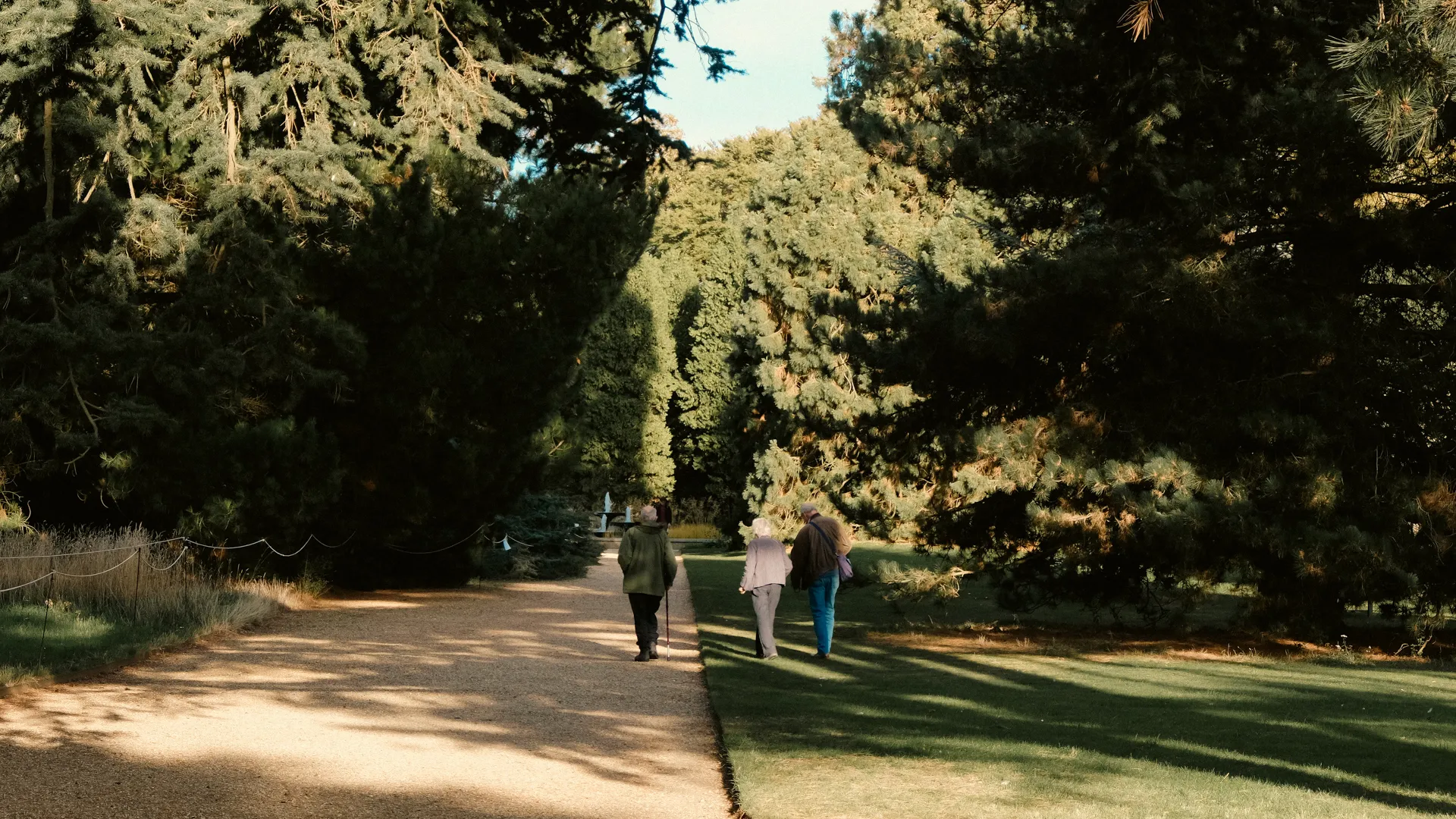
Just a short stroll from the city centre, the Cambridge University Botanic Garden offers a peaceful retreat into nature. Whether you’re a plant lover, a photographer, or simply in need of a tranquil break, this 40-acre garden is one of Cambridge’s must-visit destinations.
Highlights: Glasshouses, Seasonal Colour & Hidden Corners
The garden is home to over 8,000 plant species from around the world, beautifully arranged across themed landscapes. One of its standout features is the stunning range of glasshouses, where you can explore everything from tropical rainforests to desert habitats. The seasonal displays are constantly changing, making every visit unique—spring brings a sea of bulbs, summer explodes with colour, and autumn offers a golden spectacle of foliage.
Don’t miss the Systematic Beds—a living library of plant diversity arranged by botanical family—or the peaceful lake, perfect for a reflective moment.
A Garden with a Story
The Cambridge University Botanic Garden was founded in 1846 for the study and display of plants. Designed to support botanical teaching and research, it continues to be managed by the University of Cambridge. Over the years, it has become both a scientific hub and a public garden, striking a rare balance between education and enjoyment.
Opening Times & How to Get There
The garden is open daily (except between Christmas and New Year), typically from 10am to 6pm in the summer and until 4pm in the winter. Entry is ticketed, with discounts available for students and children. You can reach the garden easily—it’s about a 10-minute walk from Cambridge Train Station and a 15-minute walk from the city centre. There’s also cycle parking and nearby bus routes.
Nearby Attractions
Once you’ve explored the garden, you’re perfectly placed to discover more of Cambridge. The Fitzwilliam Museum, the colleges along Trumpington Street, and the charming Mill Road with its independent cafes and shops are all within walking distance.
Why Visit?
Whether you’re visiting with kids, taking a solo stroll, or looking for a peaceful spot to picnic, the Cambridge University Botanic Garden offers a refreshing slice of calm and curiosity in the heart of the city. A perfect blend of science, nature, and beauty—this garden invites you to slow down and take it all in.
Open Hours
-
Monday - Sunday 10:00 am - 6:00 pm
Directions
Cambridge University Botanic Garden
-
1 Brookside
-
Cambridge
-
CB2 1JE
More Attractions
The Fitzwilliam Museum is a rewarding stop for any visitor. The grand building alone is worth the visit, with interiors that feel more like a palace than a museum. Inside, the Fitzwilliam serves as the University’s treasure house, holding an extraordinary range of displays, from Ancient Egyptian relics and medieval armour to European ceramics and contemporary art. Free to visit and just a short walk from King’s Parade, the Fitzwilliam offers visitors a warm introduction to some of the University’s most treasured artifacts.
What's on display

The Fitzwilliam’s collection spans both centuries and continents, offering visitors an unexpectedly wide range of treasures. Its galleries include paintings by major Italian masters such as Titian, Veronese, Tintoretto and Canaletto, alongside a strong display of Dutch works and Delft earthenware that reflect the museum’s historical Dutch connections.
Fitzwilliam also bequeathed an outstanding collection of Handel memorabilia, adding a musical dimension to the displays. Among the most curious objects are coins from the reign of Ögedei, son of Genghis Khan, once strung together through their square centers — a feature often linked to the origin of the phrase “strapped for cash.”
In the main entrance hall stands a bust of the radical MP John Tooke, a noted supporter of the American rebels during the War of Independence, alongside a sculpture of Prince Albert added in the 1870s.

Visitors can also explore Ancient Egyptian artifacts, medieval weapons and armour, and an extraordinary coin collection enriched by Professor Grierson of Gonville & Caius, whose donation alone was valued at over £5 million.
Foundation

Founded via bequest by Richard FitzWilliam in 1816, whose family wealth helped fund the museum's creation. Drawing on Dutch-linked fortunes, the Fitzwilliams provided an initial £100,000 to establish and build the museum. It was later strengthened by major philanthropy, including a gift of just under $20,000,000 from an American industrialist.
A portrait of Richard Fitzwilliam hangs in the main entrance hall. In his will, Fitzwilliam stipulated that the painting must never leave the building. Another portrait linked to Fitzwilliam is associated with the phrase “costing an arm and a leg,” as the sitter’s limbs were deliberately hidden behind a gown to reduce the expense of painting the arms.
The building

Museum designs began in 1835, with the original plans drawn up by George Basevi, who died after a fall from scaffolding at Ely Cathedral. His successor in the project also died while in office, delaying progress further. The building was eventually completed by Edward Middleton Barry in 1875.
The Fitzwilliam stands as a Grade I listed building, designed in a grand Baroque style with strong Greco-Roman precedents. Its architecture reflects a significant Italian influence brought back by architects returning from the continent at the time. This can be seen in the front pillars, which deliberately echo the Parthenon in Rome, symbolically linking Cambridge to the classical world.
The Cambridge Night climbers famously used the lions below the pillars as a starting point for the “Lion to Chimney” route. With no college porters on duty, the building was an easy target. Modern security cameras and sensors have since retired the practice.
The Fitzwilliams Role Within The University Today

Beyond protecting Cambridge’s treasures, the museum now plays an active role in strengthening the University’s international relationships through major exhibitions. A notable example was the 2012 exhibition on Han culture, the largest of its kind ever staged outside China. Closer to home, the Fitzwilliam also runs a programme of free public lectures, extending its role as a centre of learning beyond its galleries.
Visiting Information
The Fitzwilliam Museum is a free, must-see stop in central Cambridge, a short walk from King’s Parade and the Mill Pond punting area. Even a brief visit is worthwhile, but allow 1–3 hours to explore properly.
Opening Times:
Monday : Closed
Tuesday – Saturday: 10:00 AM – 5:00 PM
Sunday: 12:00 PM – 5:00 PM
Bank holidays: 12:00 PM – 5:00 PM
Tickets:
Free
Address:
Trumpington St, Cambridge CB2 1RB
Contact:
[post_title] => Fitzwilliam Museum [post_excerpt] => The Fitzwilliam Museum in Cambridge is a renowned art and antiquities museum that houses a vast and diverse collection, including works of art, ancient artifacts, and manuscripts. [post_status] => publish [comment_status] => closed [ping_status] => closed [post_password] => [post_name] => fitzwilliam-museum [to_ping] => [pinged] => [post_modified] => 2026-02-13 21:57:58 [post_modified_gmt] => 2026-02-13 21:57:58 [post_content_filtered] => [post_parent] => 0 [guid] => http://remember-cambridge.local/?post_type=attraction&p=622 [menu_order] => 0 [post_type] => attraction [post_mime_type] => [comment_count] => 0 [filter] => raw ) 1 -->
-
Cambridge University Botanic Garden
Discovering a Creative Escape in Cambridge
Kettle’s Yard is a modern and contemporary art gallery and historic house in Cambridge, forming part of the University of Cambridge. The site combines free changing exhibitions with a preserved domestic art collection, offering an alternative to the traditional museum experience. Its programme focuses on early 20th-century Modernist art, with particular attention to British artists. Today, the gallery is directed by Andrew Nairne.
Origins and Vision

Kettle’s Yard began as the home of Jim Ede, a former Tate Gallery curator active during the 1920s and 1930s. In 1956, Ede transformed four small workers’ cottages into a living exhibition space designed to integrate art into daily life. He opened the house each evening to students, personally guiding visitors through the collection in an informal setting.
Ede described the house as a living place where works of art could be enjoyed without the austerity of a museum. He and his wife lived among the artworks for ten years before donating the property to the University of Cambridge in 1966. A purpose-built Modernist exhibition gallery was later added in 1970, expanding public access while preserving the character of the original home.
Atmosphere and Experience
The experience at Kettle’s Yard remains intentionally intimate. Visitors move through domestic rooms rather than formal galleries, encountering artworks placed alongside furniture, plants, stones, and natural objects. The arrangement encourages slow observation and quiet contemplation.
Entry to the house is limited to small timed groups, and spaces can feel compact. This constraint contributes to the atmosphere, reinforcing the sense of entering a lived-in artistic environment rather than a conventional museum.
Permanent Collection
The permanent collection includes paintings, sculpture, furniture, glass, and carefully selected natural materials arranged throughout the house. Works by artists such as Barbara Hepworth, Henry Moore, Joan Miró, Constantin Brâncuși, and Henri Gaudier-Brzeska are displayed as part of everyday living spaces rather than isolated exhibits. The presentation reflects Jim Ede’s belief that art should coexist naturally with daily life.
Exhibitions, Events, and Learning
Alongside the historic house, the exhibition galleries host a rotating programme of contemporary shows featuring both emerging and established artists. Concerts and live performances continue Ede’s belief in the relationship between music and visual art.
A four-floor education wing supports public engagement through talks, workshops, and learning programmes aimed at widening access to modern art. Regular family activities and creative sessions make the gallery accessible to younger visitors.
Visitor Information
Entry to the exhibition galleries is free, while access to the house requires a timed ticket. Visits take place at set intervals with small guided groups to preserve the atmosphere and protect the collection. General admission costs £10 with an optional £2 donation, while under-25s and University of Cambridge students enter free.
Last entry is at 4pm. The gallery is closed on Mondays and typically open Tuesday to Sunday from 1:30pm to 4:00pm. Due to limited space, large bags are not permitted inside the house.
Café and Facilities
An on-site café provides a relaxed setting for refreshments after exploring the galleries. Offering solid food and drink options, it serves as a natural pause point and a calm conclusion to the visit.
Nearby Places to Explore

Kettle’s Yard sits close to several historic and cultural landmarks, including Castle Hill and the Museum of Cambridge. Visitors can continue towards Jesus Green or the Quayside, both popular areas for riverside walks and punting.
Plan Your Visit
Kettle’s Yard remains a rare hybrid of home, gallery, and educational space. Its atmosphere is serene, reflective, and personal in scale. Just a short walk from central Cambridge, it offers a quiet cultural escape hidden behind a modest façade.
[post_title] => Kettle’s Yard [post_excerpt] => Kettle’s Yard, the University of Cambridge's modern and contemporary art gallery, is a stunning house with an exceptional collection of modern art. Alongside the house, the gallery hosts a dynamic range of exhibitions showcasing both modern and contemporary works [post_status] => publish [comment_status] => closed [ping_status] => closed [post_password] => [post_name] => kettles-yard [to_ping] => [pinged] => [post_modified] => 2026-02-23 14:28:55 [post_modified_gmt] => 2026-02-23 14:28:55 [post_content_filtered] => [post_parent] => 0 [guid] => http://remember-cambridge.local/?post_type=attraction&p=624 [menu_order] => 0 [post_type] => attraction [post_mime_type] => [comment_count] => 0 [filter] => raw ) 1 -->
-
Kettle’s Yard