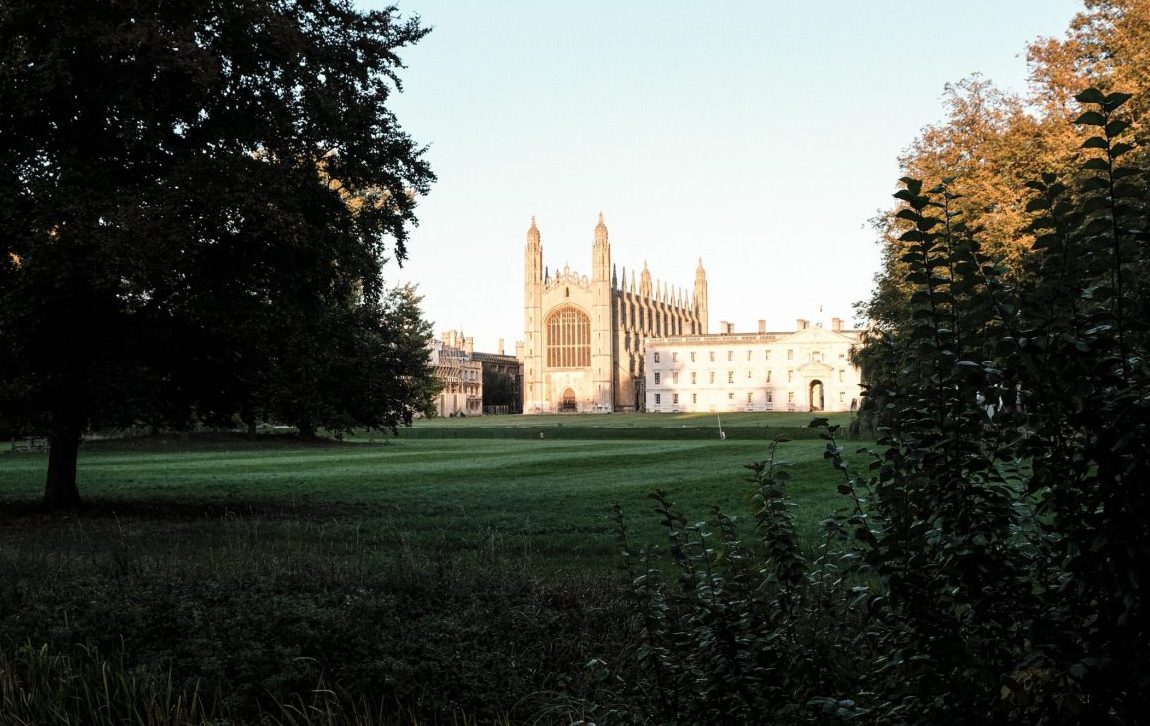
King’s College, together with its chapel, stands as Cambridge’s most distinctive landmark, easily recognised by visitors from all corners of the world. Its dramatic architecture and royal origins make it an essential stop for any visitor.
History
King’s College was founded in 1441 by Henry VI, during a period of great ambition for the English crown. The first stone was laid on 2nd April 1441 by the king himself,marking the beginning of what would become one of the grandest colleges in Cambridge.
Henry originally intended the college to educate twelve “poor scholars” and to dedicate it to Saint Nicholas. The project’s scale was later dramatically expanded, increasing the planned number of fellows and scholars to seventy.
To accommodate the expanded design, houses and businesses belonging to local townspeople were purchased and demolished, reshaping the riverside area and the site of today’s King’s Parade.
Political instability repeatedly interrupted construction. Funding was diverted during the Wars of the Roses, and after Henry VI’s deposition in 1461, work stalled until 1508, when Henry VII revived the project. The chapel’s interior was completed in 1544 under Henry VIII, who added Tudor symbols and heraldry still visible today.
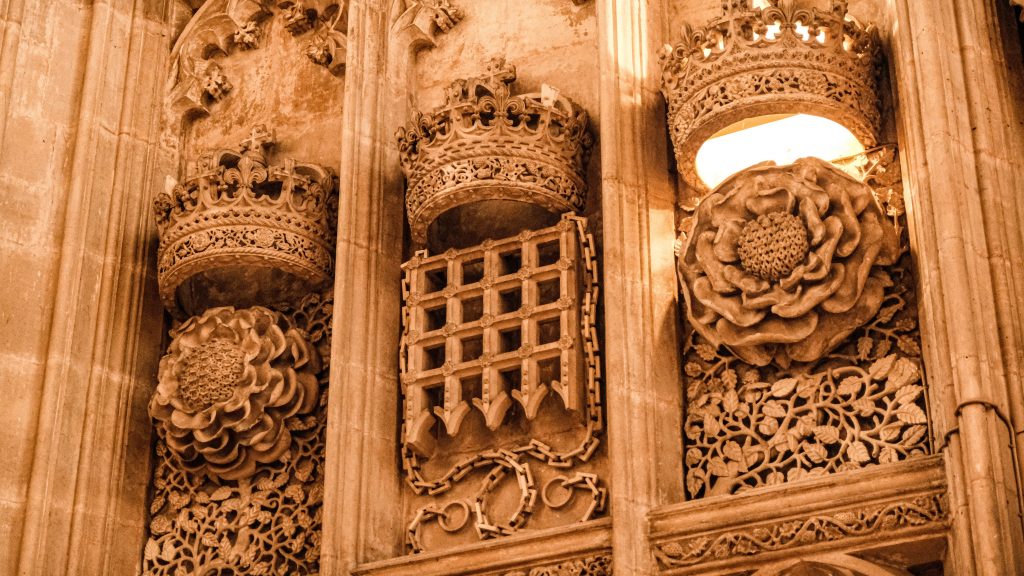
Visitors can see a clear line along the lower stonework of the chapel, marking the division between the earlier medieval construction and the later Tudor phase—a subtle detail for those interested in architectural history.
For much of its early history, King’s College admitted students exclusively from Eton College, which Henry VI also founded just one year earlier in 1440. The two institutions were legally and financially linked, and each year a small number of Eton scholars progressed directly to King’s. Students were not required to sit final examinations; instead, academic progress was assessed internally by the college. This privileged arrangement was abolished in 1865, and from 1961 onwards, King’s opened its doors fully to students from other schools.
Architectural Highlights of King’s College
King’s College Chapel
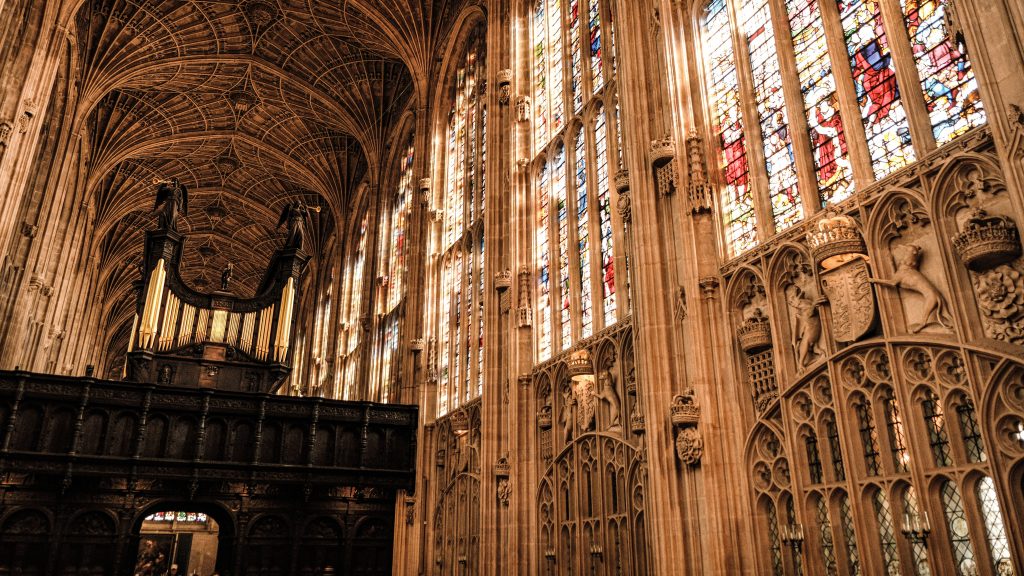
King’s College Chapel is without doubt one of the key landmarks to see when visiting Cambridge. Built between 1446 and 1531, it is considered one of the finest examples of Late English Gothic architecture anywhere in the world. Its vast interior is crowned by the largest fan-vaulted ceiling ever constructed, a truly extraordinary feat of medieval engineering.
The chapel contains twenty-six magnificent stained glass windows, most dating from the early sixteenth century, which depict the relationship between the Old and New Testaments. During the Second World War, the windows were carefully removed and stored between 1939 and 1945 to protect them from potential bomb damage.
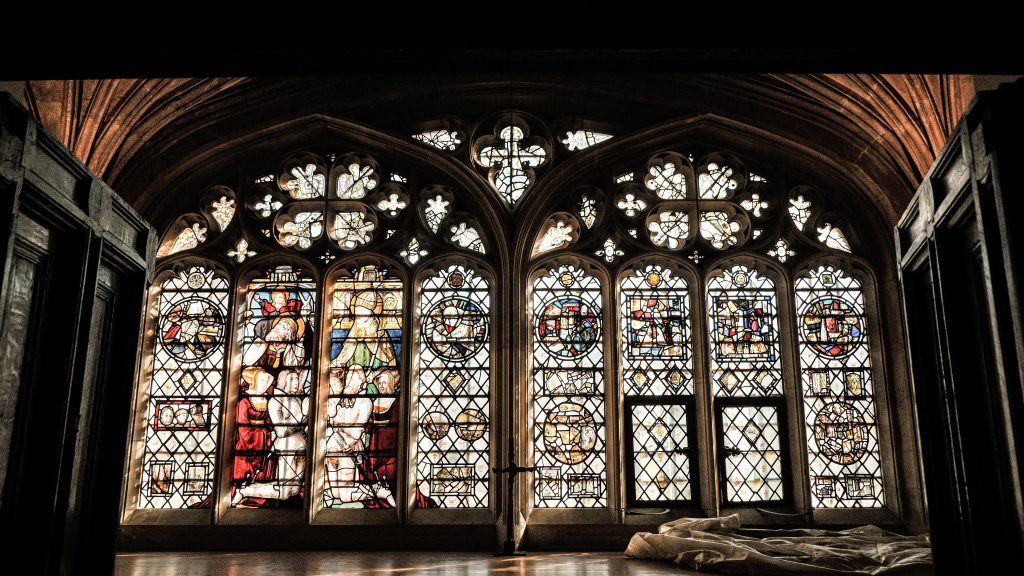
Intricately carved wooden chancel screens divide the chapel and add to its rich visual detail. Despite its popularity with visitors, the chapel remains an active place of worship and a living part of college life. It is also home to the world-famous King’s College Choir, whose Christmas Eve broadcast of the Festival of Nine Lessons and Carols is heard by millions worldwide. During university term time, visitors may attend Evensong and experience the chapel as it was intended—filled with music.
Bodley’s Court
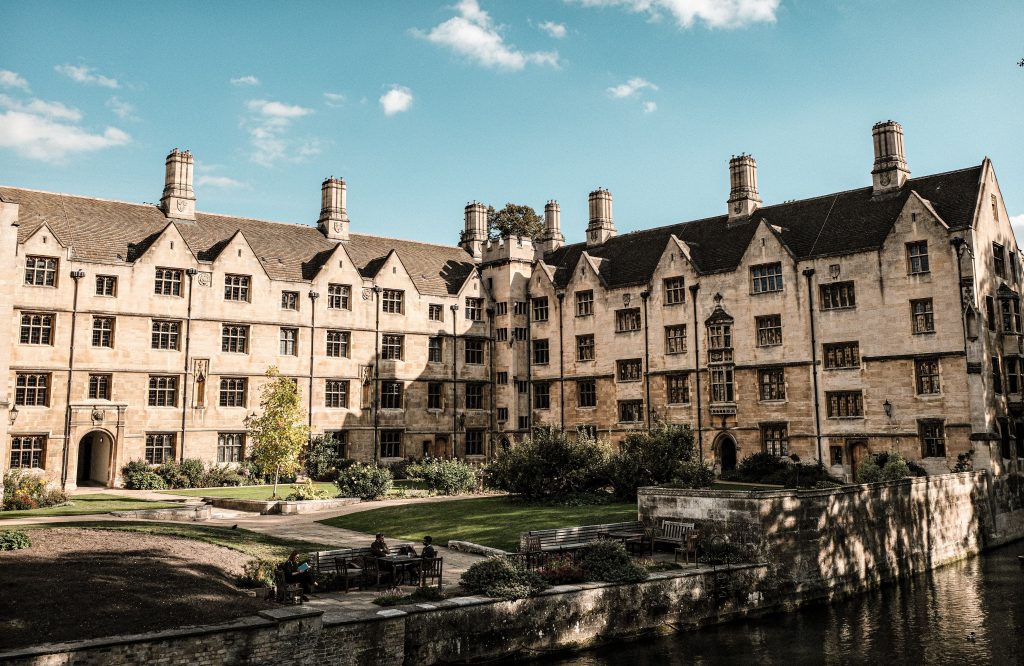
Bodley’s Court dates from the late 18th century, with construction completed in 1765, and continues to provide student accommodation at King’s College. The court forms part of the classic Cambridge riverside view seen by visitors punting along the Cam. Its calm, classical façade provides a striking contrast to the Gothic scale of King’s College Chapel.
King’s Bridge & Memorial Stone
King’s Bridge was built in 1823 and spans the River Cam within the grounds of King’s College, linking King’s Common to the chapel and offering clear views of the surrounding historic buildings.
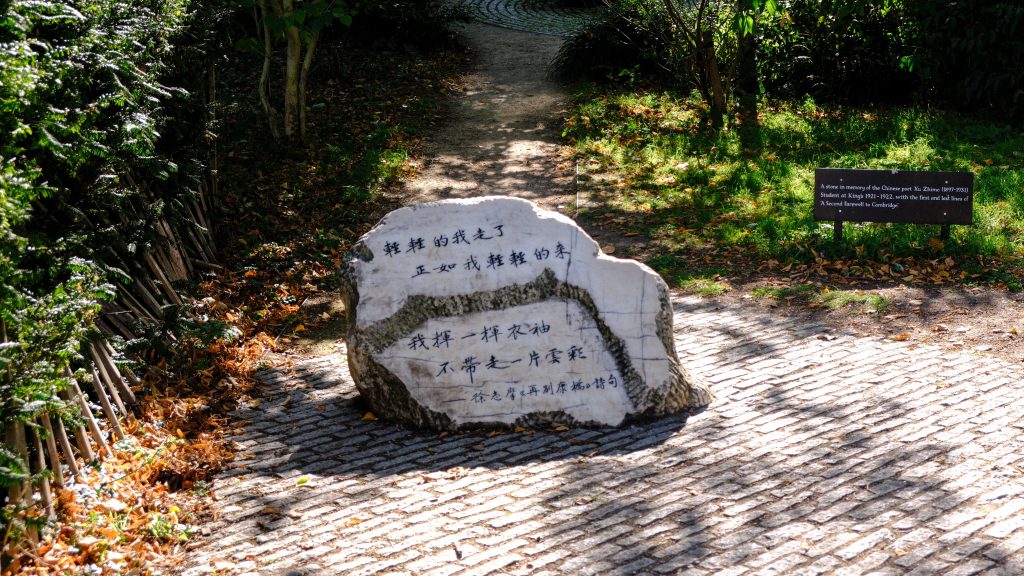
Just past the bridge stands a memorial stone dedicated to Xu Zhimo, a former King’s College student and one of the most influential poets of modern China. Xu is celebrated for introducing Western Romantic poetry to Chinese literature and for writing in a more personal, expressive style that broke with traditional forms. His time at Cambridge deeply influenced his work, and he often wrote about the city as a place of freedom, beauty, and inspiration.
Xu Zhimo’s life was cut short in 1931, when he died in a plane crash while travelling in China. His early death, combined with his romantic poetry and intellectual legacy, elevated him to a near-mythical status in Chinese literary culture. As a result, King’s College has become an important place of remembrance for many Chinese visitors, who come specifically to see the bridge and memorial stone associated with his time in Cambridge.
Together, King’s Bridge and the memorial stone provide visitors with a quiet moment of reflection and a strong example of the college’s global cultural connections.
The Gibbs Building
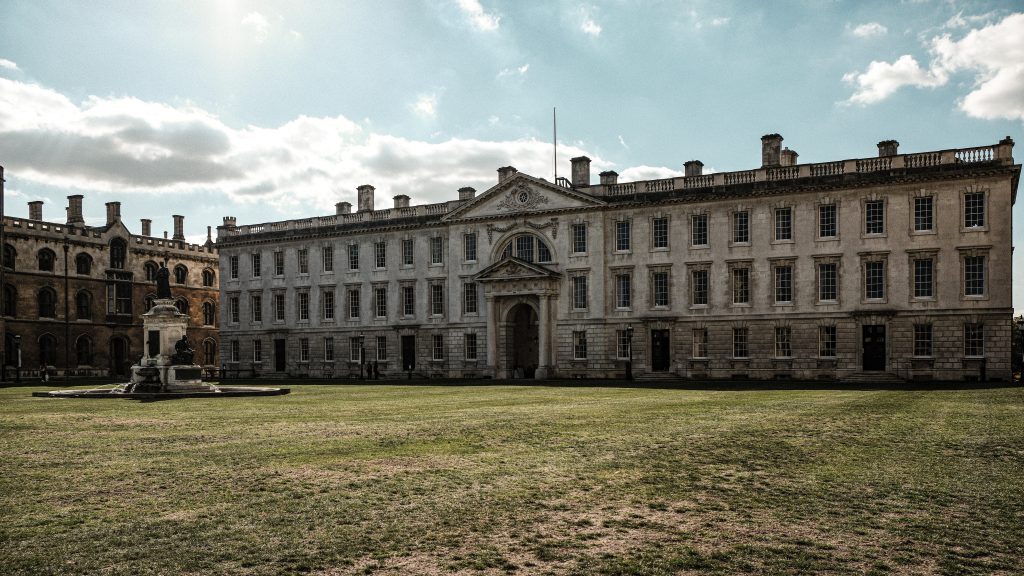
Designed in the 18th century, the Gibbs Building is one of the most recognisable façades in Cambridge. It was constructed to provide improved living quarters for scholars and fellows, replacing older, less uniform structures. Today, it continues to serve its original purpose and remains in active use as student accommodation
Architecturally, the Gibbs Building represents a clear departure from the medieval origins of the college. Built in a restrained classical style, it features strong horizontal lines, evenly spaced sash windows, and a formal stone façade that was intended to project order, stability, and prestige. This was a deliberate statement at a time when the college was modernising its image while maintaining its royal heritage.
Notable Alumni and Fellows
John Maynard Keynes
Economist – Graduated with a first-class BA in mathematics from King’s College in 1904.
Alan Turing
Computing pioneer – Completed his undergraduate studies at King’s College in 1934, earning first-class honours in mathematics.
Robert Walpole
Britain’s first Prime Minister – Studied at King’s College from 1696, but left before graduating in 1698 due to a family bereavement.
David Baddiel
Writer, broadcaster, and comedian – Graduated from King’s College with a double first in English (mid-1980s, commonly cited as 1986).
Visiting King’s College
Tickets can be purchased online or from the King’s College Visitor Centre. At approximately £17, King’s is one of the more expensive Cambridge colleges to visit. Admission includes access to the chapel and selected areas of the grounds, including the memorial stone.
For most visitors, the chapel alone makes the ticket worthwhile. Its scale, craftsmanship, and atmosphere ensure that King’s College remains one of the most memorable and rewarding attractions in Cambridge.