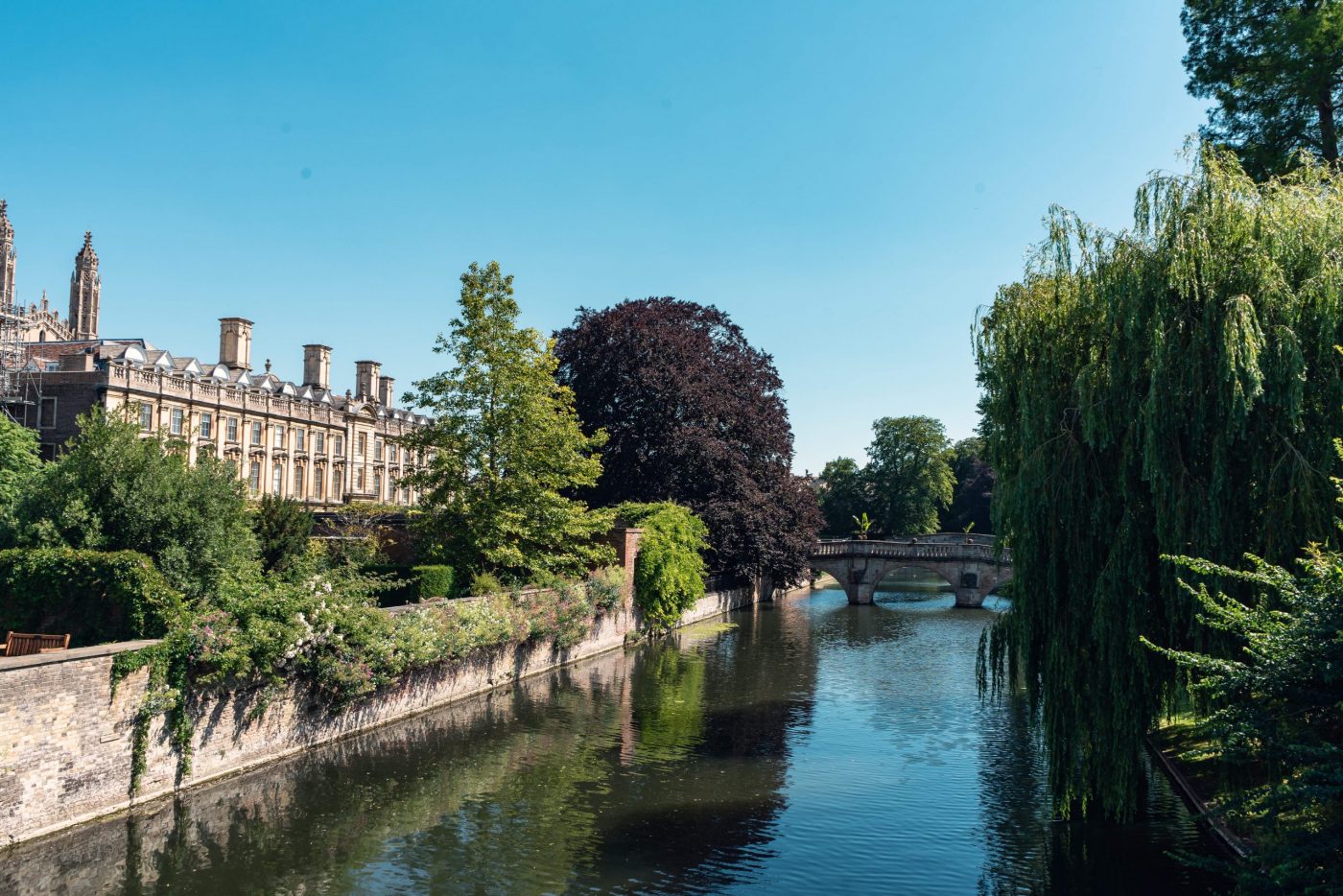
Founded in 1326, Clare college is the second oldest surviving college in Cambridge. Located within the heart of the university with fellow gardens and along the east bank of the River Cam. Clare college balances seven centuries of architectural history—from its medieval Old Court to modern residential blocks—with a vibrant student community known for its music culture and accessible, inclusive atmosphere.
History and Founding
Clare College was established through the partnership of Richard de Badew, Chancellor of Cambridge in 1326, and Lady Elizabeth de Clare, one of medieval England’s most influential women. De Badew founded the college as University Hall, originally designed to train clergy following the shortage caused by the Black Death. The college remained underfunded and small until Lady Elizabeth, widow of John de Burgh and daughter of the Earl of Clare, took patronage in the late 1330s.
In 1336, Lady Elizabeth obtained a licence to transfer the rectory of Litlington to the college, providing stable income. She subsequently endowed additional rectories—Duxford St. John, Great Gransden, and Wrawby—transforming University Hall into a thriving institution. Under her leadership, the college’s purpose shifted from training clergy to nurturing a mixed community of undergraduates, fellows, and graduate scholars. Lady Elizabeth formalized the college’s statutes in 1359, establishing governance principles that emphasised both scholarship and community. Her vision was pioneering: she created the first college at Cambridge to include undergraduates alongside fellows, a model that would not appear at Oxford until New College was founded in 1379.
The college adopted the name Clare Hall after Elizabeth’s patronage became complete, eventually becoming Clare College. In 1521, a fire destroyed most of the college’s early records, leaving gaps in the detailed history of its first two centuries. The surviving library, enlarged around 1425, remains one of the college’s architectural landmarks.
Notable Features
Clare is recognised for pioneering co-education at Cambridge and for maintaining an inclusive, welcoming ethos across its long history. Its strong music tradition distinguishes it from many peer institutions, offering an authentic window into the cultural life of a historic Cambridge college.
The founding partnership between Richard de Badew and Lady Elizabeth de Clare—one of the few instances in medieval Cambridge history where a woman held primary patronage over a major institution—remains a defining chapter in the college’s seven-century story.
Buildings and Courtyards
Old Court, the historic core of the college, dates to the original medieval foundation and remains the architectural heart of Clare. The college expanded over centuries, creating a series of courtyards and residential blocks across its central and peripheral sites. On the east bank, the main site is organised around these historic courts; on the west bank, Butt Close provides expansive gardens that students describe as among the best in Cambridge.
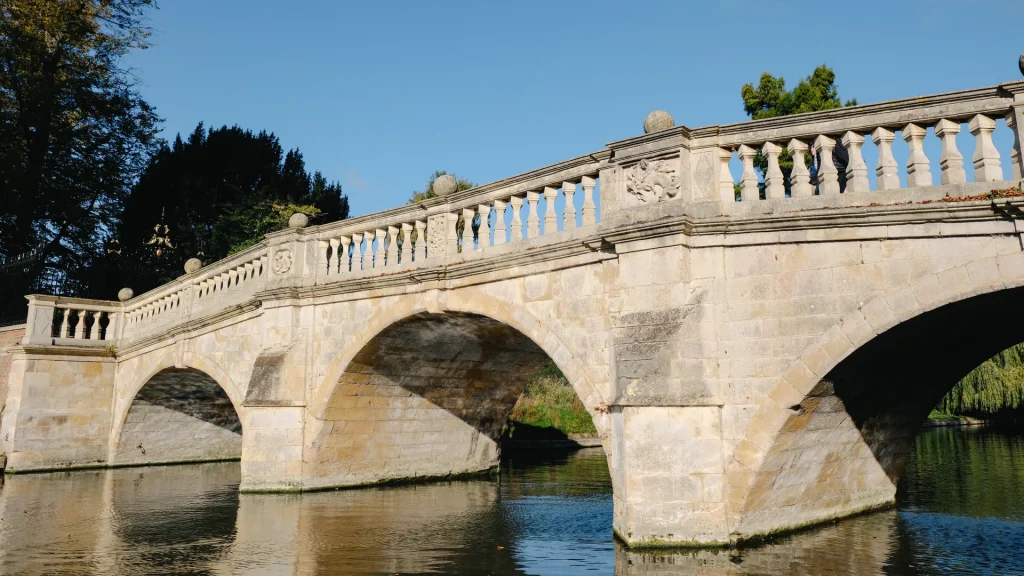
Clare Bridge, one of Cambridge’s most recognisable college bridges, crosses the Cam and connects the main site to the gardens. The bridge has become an iconic symbol of the college and a favourite destination for visitors to Cambridge.
Memorial Court, built on Queen’s Road in the 20th century, now houses most first-year undergraduates. This large residential block sits close to the University Library and academic buildings on the Sidgwick Site. Castle Court and Lerner Court provide additional accommodation across the college’s distributed sites.
The Student Community
Clare accommodates approximately 140 undergraduates per year, making it a moderately sized college. Around 80 first-year students arrive each October, typically housed together in Memorial Court to build cohesion. The college is known for a tight-knit, inclusive community atmosphere. In 1972, Clare became one of the first Cambridge colleges to admit women, establishing itself as an early pioneer of co-education in the university.
The college maintains strong support structures for student welfare and wellbeing. A 24-hour multifaith prayer space in Memorial Court accommodates Islam, Judaism, and Christianity, with other religious texts available on request. The college provides subsidies for university gym membership and offers hardship funding on a case-by-case basis, along with financial support for students pursuing sport at the university level.
Notable Alumni
Sir David Attenborough studied Natural Sciences here in the late 1940s, decades before he became the voice most of us associate with the natural world. James Watson held a research fellowship at Clare while working just down the road at the Cavendish Laboratory — it was during his time attached to the college, in the early 1950s, that he and Francis Crick worked out the structure of DNA. Walk through Clare’s Old Court today and it’s worth remembering that some of the last century’s biggest moments in science and broadcasting had roots right here.
Music and Culture
Clare College has a distinctive cultural identity centred on music. The college maintains a strong reputation for musical activity: the Clare College Choir performs regularly and maintains its own reputation beyond Cambridge, while the Clare College Music Society (orchestra) performs throughout the year. Jazz Nights in the college cellars have become a signature event, drawing students and visitors for informal performances in the historic underground spaces.
Visiting Clare College
Clare’s town-centre location makes it easily accessible from other colleges and the main commercial heart of Cambridge. The college’s combination of historic architecture, exceptional gardens, and active student community makes it distinctive among Cambridge’s oldest institutions.