-
Later Medieval Cambridge
Our last post ended with Cambridge on the cusp of modernity. It had gone full cycle: from prospering early-medieval town; to declarations of poverty; to an economy beginning to thrive again as the industrial era began. At the turn of the twentieth century, Cambridge was still a long way from the modern city we see today. In fact, it was not actually declared a city until 1951! Not only was it not even a city yet, but it had not undergone the dramatic social changes of the turbulent twentieth century. A century that saw two World Wars, the Womens’ Rights Movement and scientific leaps forward. But through all this, the fabric of the city, the beautiful historic buildings, remained largely unchanged.
The fight for degrees for women
The first college for women began in 1869 when Emily Davies rented a house in Hitchin and named it the College for Women. However, by 1872 this house was too small and the fledgling college was forced to move. So, in 1873 the college moved to an area of Cambridge called Girton and established themselves as Girton College. The idea was that the women would be prepared for university examinations.
But the women did not attend lectures with the male students. Instead, lecturers came to them. In the mornings they would be educated by resident female lecturers, and in the afternoons male lecturers from the University would come and teach the women. Despite 22 of the 34 university lecturers being prepared to teach the women, they were initially not allowed to take the university exams. This changed in 1881 when they were first allowed to take the Tripos Examination, as long as they did it privately and not as members of the University. But, even though they were now allowed to take the exam, they could still not receive a Cambridge University Degree.
As the nineteenth century came to an end a campaign for women to receive degrees began to reach its head. There were proposals to Cambridge University on the matter in 1888 and 1896/7. As the second proposal was being debated in the Senate House a huge crowd gathered outside to protest. Thousands of men gathered on King’s Parade to protest against tradition being broken. At the University Bookshop just opposite the Senate House (the oldest bookshop in Britain today) protestors hung up an effigy of a woman riding a bicycle – apparently riding a bicycle was a very unwomanly thing to do.
The vote was defeated on both occasions. In fact, it would take another fifty years and two world wars before women eventually were able to get a Cambridge Degree.
Cambridge during the World Wars
But the campaign for Womens’ Rights was put on hold by the outbreak of the First World War in 1914. Like everywhere else in Europe, life changed dramatically for the people of Cambridge.
Cambridge University at the time was an institution consisting almost entirely of young men. Young men who went off to fight in the trenches. This left very few students left studying at the university; often just those medically unfit to fight or wounded ex-servicemen who returned to their studies after being invalided out.
Inevitably Cambridge University lost hundreds of men throughout the war. For example, the Nott brothers who studied at Emmanual College. Thomas, Louis and Henry Nott came to Emmanuel College in 1907, 1912 and 1913 respectively. All three brothers joined the British Army during the war. Henry, the youngest, died first when he was killed on 27th April 1916 by a shrapnel shell. Both Thomas and Louis were killed one year later on 18th April 1917 by a booby-trap in a disused German dug-out abandoned during the withdrawal of German troops. Only Thomas had ever graduated from University.
The Nott Brothers were just 3 of 131 students from Emmanuel College alone who died during the First World War. As a consequence of so many students left fighting abroad, most colleges now house war memorials to remember those who were lost.
During the Second World War, Cambridge University was not depopulated to anywhere near the same extent. This was because recruitment of students to the armed forces was strictly controlled by the military this time round. Arts students could study for a year before joining the forces, whilst scientists and engineers could receive their degrees after just two years of study and then join the war effort where their qualifications could be put to use. Furthermore, the student intake to the university also included large numbers of ‘Short Course’ cadets. These were men who were already in the forces but came to take specifically designed RAF, Navy and Royal Engineers courses. Many of these cadets in fact returned to the university after the war had finished to continue their studies and gain degrees.
Furthermore, Cambridge became a hub for servicemen, particularly American Air Force men. This was because East Anglia became filled with air bases during the war as the flatness of the fens made it the perfect location for air fields. Once the United States joined the war many of these air bases were occupied by American pilots and their crews. During their free time these men enjoyed experiencing the local sites, such as the beautiful city of Cambridge.
A favourite haunt for servicemen to unwind was the Eagle Pub. It was frequented so regularly that the back room became known as the RAF bar. Inscribed on the walls and ceilings are the names of British and American airmen who visited at this time.
Fortunately, during the war, Cambridge did not receive much bombing. There is a strange rumour that Hitler was actually a massive fan of Cambridge University and had a picture of King’s College Chapel in his office. However, this story is unfortunately not true. The real reason Cambridge did not receive much bombing is believed to be that the German Air Force refrained from bombing Cambridge in the belief that it would stop the RAF bombing Heidelberg. Plus, there were no strategic military targets in Cambridge.
But it is not true that Cambridge was not bombed at all during the war. In July 1942 a bombing raid damaged several buildings on Bridge Street and Sidney Street as well as destroying the east window of the Round Church. However, the university buildings survived the war with negligible damage. Nevertheless, the stained glass windows from King’s Chapel were moved to a safe location just in case.
A Modern City of Science
As the war drew to a close and life slowly returned to normal, Cambridge once more became the centre of scientific discoveries that have created the world we know today. For example, on the 28th February 1953 Watson and Crick published the Double Helix of DNA.
It is often wrongly claimed that Watson and Crick ‘discovered’ DNA whilst at the pub. However, the discovery of DNA dates back way further than 1953. It was back in 1866 that the ‘Father of Genetics’, Gregor Mendel, realised genetics are passed down through generations. Then a few years later, in 1869, Friedrich Meischer, isolated what was later known as DNA.
But in 1953, Watson and Crick barged into the Eagle Pub, where they ate dinner 6 days a week, and announced “we have discovered the secret of life”. What they had discovered was the double helix structure of DNA. Something crucial to our current understanding of DNA and which has had a huge impact on modern science.
It is only fitting, therefore, that a huge part of Cambridge’s wealth comes from its contributions to science and technology. So much so that its surrounding area is commonly referred to as Silicon Fen because of the large number of high-tech businesses which call the region home.
And so, Cambridge’s intellectual prowess attracts visitors from all over the world to study, work or simply visit its incredible sites. 800 years ago the town Cambridge had developed into an internationally renowned centre of trade. Combined with the might of the University it has developed into the city it is today. A city which seamlessly mixes the old fashioned with the modern and is respected around the world.
More articles
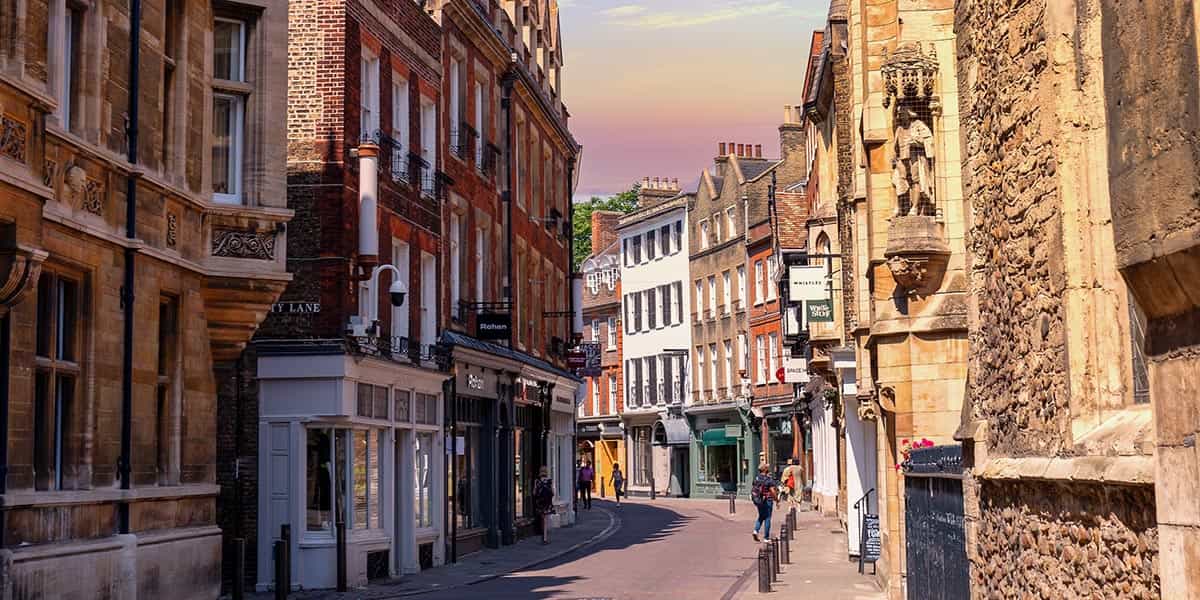
Parking in Cambridge can feel confusing for first-time visitors. The historic core is compact, heavily pedestrianised, and protected by traffic restrictions designed to preserve the city’s character. That’s great for walking — but it means choosing the right car park before you arrive makes a huge difference to how smoothly your day starts.
The good news is that Cambridge has several well-located car parks within comfortable walking distance of the historic centre. Each has a slightly different advantage: some are cheaper, some are closer to the colleges and museums, and others are easier to access from major roads.
Below is a practical guide to the best parking options, including approximate prices, nearby attractions, and realistic walking times into the heart of the city.
(Prices may change — always check signage or official sites on arrival.)
Grand Arcade Car Park
The most central large car park in Cambridge and the easiest option if your priority is immediate access to the main shopping streets and historic squares.
From here you step directly into the commercial heart of the city. Within minutes you reach Market Square, Great St Mary’s Church, and several college entrances.
This is one of the pricier choices, but the convenience is unmatched for central access.
Directions
- Address: Grand Arcade car park, Corn Exchange Street, Cambridge CB2 3QF.
- Nearby attractions: Cambridge Market Square and Great St Mary’s Church.
- Distance from Centre: 0.6km / under 10 min walk.
Price
- Weekdays (Mon–Fri, 8am–6pm): £2.70/hr
- Saturday (8am–6pm): £3.30/hr
- Sunday (10am–6pm): £3.30/hr
- Free: After 6pm
Open Hours & Capacity
- Open hours: 24 hours.
- Capacity: 953 spaces.
Queen Anne Terrace (Parkside)
One of Cambridge’s largest multi-storey car parks and a reliable option during peak tourist periods. Its size means availability is usually better than smaller central sites.
It sits beside Parker’s Piece, a large historic green where modern football rules were first formalised. From here, the walk into the centre is flat and straightforward.
This is often the best balance between price, space, and walking distance.
Directions
- Address: Queen Anne Terrace car park, Gonville Place, Cambridge CB1 1ND.
- Nearby attractions: Parker’s Piece.
- Distance from Centre : 1.3km / 15 min walk.
Price
- Weekdays (Mon–Fri, 8am–6pm): £2.30/hr
- Saturday (8am–6pm): £3.00/hr
- Sunday (10am–6pm): £3.00/hr
- Free : After 6pm
Open Hours & Capacity
- Open hours : 24 hours.
- Capacity: 527 spaces.
Grafton West Car Park
Located beside the Grafton Centre, this car park offers a pleasant walk into the historic centre across Midsummer Common.
It’s a practical alternative when central car parks are busy and provides a relaxed approach into the city.
A solid mid-distance option with green space on your walking route.
Directions
- Address: Grafton West car park, Fitzroy Lane, Cambridge CB1 1HE.
- Nearby attractions: Midsummer Common.
- Distance from Centre: 1.2km / 15 min walk.
Price
- Weekdays (8am–6pm): £2.50/hr
- Saturday (8am–6pm): £3.10/hr
- Sunday (10am–6pm): £3.10/hr
- Free: After 6pm
Open Hours & Capacity
- Open hours: 24 hours.
- Capacity: 279
Gwydir Street Car Park
A smaller, budget-friendly option suited to short visits. It’s located just off Mill Road, one of Cambridge’s most characterful streets, known for independent restaurants and international food shops.
The walk into the centre takes you through a lively local neighbourhood before joining the historic area.
Good for quick trips to Mil Road rather than full-day parking.
Directions
- Address: Gwydir Street, off Mill Road, Cambridge CB1 2LW.
- Nearby attractions: Mill Road cafés and independent shops.
- Distance from Centre: 1.5km / 20 min walk.
Price
- Mon–Sat: (8am–6pm): £1.80/hr
- Free: Evenings & all day Sunday.
Open Hours & Capacity
- Open hours: 24 hours.
- Maximum stay: 4 hours.
- Capacity: 38
Castle Hill Car Park
A small car park in one of Cambridge’s oldest neighbourhoods. It’s farther from the centre but often quieter than multi-storey options.
A good fallback when closer car parks are full.
Directions
- Address: Castle Hill, off Castle Street, Cambridge CB3 0AT.
- Nearby attractions: Castle Mound.
- Distance from Centre: 1.6km / 20 min walk.
Price
- Up to 2 hours: £2.80
- Up to 4 hours: £5.60
- + 4 hours: £8.90
- Sunday: 4.50 all day
Open Hours & Capacity
- Open hours: 24 hours
- Maximum stay: 5 hours
- Capacity: 111
Lammas Land Car Park
A quieter and more scenic parking option popular with families and walkers. The route into town passes through open green space and commons.
This is one of the most pleasant walking approaches into the city centre.
Ideal if you want to combine sightseeing with time outdoors.
Directions
- Address: The Driftway, Newnham Road, Cambridge CB3 9JJ.
- Nearby attractions: Lammas Land recreation ground and Coe Fen Common.
- Distance from Centre: 1.7km / 25 min walk.
Price
- Up to 2 hours: £2.30
- Up to 4 hours: £5.50
- Weekend maximum stay: 5 hours
- Free: Evenings (check signage)
Open Hours & Capacity
- Open hours: 8am - 9pm
- Maximum stay: 5 hours
- Capacity: 75
Beehive Retail Park
A large out-of-centre retail car park offering free short-stay parking. It’s much farther from the historic centre, but useful if you’re combining shopping with a city visit.
Better suited for short retail trips or bus access into town rather than walking.
Directions
- Address: Beehive Centre, Coldhams Lane, Cambridge CB1 3ET.
- Nearby attractions: Lammas Land recreation ground and Coe Fen Common.
- Distance from Centre: 3km / 25 min walk.
Price
- Free: Everyday
Open Hours & Capacity
- Open hours: 24 hours
- Maximum stay: 4 hours
- Capacity: 250 +
Park & Ride: The Easiest Option for Day Trips
If you’re arriving from outside Cambridge, Park & Ride is often the most stress-free solution. You park on the edge of the city and take a short bus journey into the centre.
Buses run frequently and drop you within walking distance of the historic centre.
- Return ticket: £3.50 per adult includes up to 3 children under 16
- Group ticket: £10.50 (up to 5 adults)
Sites serve all major approach roads:
- Milton (north)
- Newmarket Road (east)
- Madingley Road (west)
- Babraham Road (south-east)
- Trumpington (south-west)
-
A Complete Visitors Guide to Parking in Cambridge
-
Cambridge Town & Gown