-
Cambridge Town & Gown
Roman Cambridge, or Duroliponte, had flourished but like much of the country it went into decline after the fall of the Roman Empire. Those who were left in Cambridge were cut off from the rest of the Empire. Change was fast and permanent. But… what actually happened to Britain is a matter for debate amongst historians. Did we really enter the dark ages? Or did life continue much as it did before? This post will attempt to summarise Cambridge’s medieval history by trying to work out how Cambridge developed during the Early Medieval period. It will see how the town navigated through the dark ages.
Early Anglo-Saxon Era
No definitive houses or remains of buildings from the Early Anglo-Saxon era have been discovered underneath modern Cambridge. However, there are extensive cemeteries from the era suggesting it continued to be occupied. The largest such cemetery was where St John’s cricket field is now located. This was mainly a cremation cemetery and more than 100 urns from the site were taken to the Cambridge University Museum of Archaeology and Anthropology. Many hundreds more are believed to have been destroyed by building work over the centuries.
It is no coincidence that many burials have been found on both sides of the river. Cambridge was still in an important location. The land around it was perfect for agriculture meaning that many villages flourished and people were able to become wealthy.
It is also believed that Cambridge itself and the River Cam were the boundary between the emerging kingdoms of Mercia and East Anglia. Control of the crossing point of the river was crucial to controlling trade coming in from the North Sea. As a result there were rich settlements on both sides of the River as different tribes struggled to control the area.
There were believed to have been two main settlements in what is now Cambridge. One centred around Castle Hill to the North West of the River Crossing. This was where the iron age settlement and Roman town were previously. Castle Hill was a perfect place to have a settlement: up on the high ground overlooking a crossing point for the river. After all, Castle Hill, is the highest point between Cambridge and the North Pole!
The second settlement is where St Benet’s Church now sits (this is the oldest building in the city but was not yet built at this time!). It would appear therefore that Cambridge continued to thrive in the early Anglo-Saxon era, despite being split into smaller settlements.
‘A little ruined city called Grantacaestir’
But, towards the end of the 7th century (almost 300 years after the Romans left) we have our first surviving written reference to the town. The foundress of the monastery at Ely: St. Ethelreda, died and her sister sent messengers to ‘a little ruined city called Grantacaestir’. They were looking for a stone coffin to bury her in. Within the walls of the old Roman town they managed to find one of Roman origin.
At this time the walls of the Roman town would still have been recognisable and it was probably the focus for regional tribal activity. However, the size of the settlement would probably have been much smaller than under Roman rule. As a result, the messengers from Ely may well have found many Roman buildings falling into ruin.
Later Anglo-Saxon Cambridge
In the 8th century the town was under the rule of the powerful Mercian King, Offa. He was famous for creating well defended urban centres. The pre-existing Roman fortifications meant that he could create a town within the walls that prospered under military protection. It is believed that a church was built around this time, however, no trace remains. It could have been on the site of the current churches of St. Giles or All Saints, or even within the castle area itself.
It was most likely that it was Offa that built a bridge over the River a short distance from where the Roman one had stood. In order to build a bridge across both sides of the river he needed to be secure in his power on both sides. At least enough for the economic advantages to be worth the military risk.
Because of this bridge the town earns a new name. It appears in the Anglo-Saxon Chronicle in 875 as Granta Brycge. This name translates to ‘Granta Bridge’ due to the simple fact that the town had a Bridge over the River Granta.
Over time the name changed to Granta Bridge and eventually to Cam Bridge. The section of the river that flows through the town became known as the River Cam. Although it is still the River Granta that flows into Cambridge and does not become The Cam until it reaches the Mill Pond!
Conclusion
Overall, the 400 years which followed the end of Roman Britain tell a rather murky story. The lack of evidence leaves historians in the dark about what actually happened. Leading to the nickname for the era: the ‘Dark Ages’.
As the Romans left, so too did an inclination to write things down. Whilst it is not true no one in early Anglo-Saxon England could not write, it is true that those who did lacked the inclination to do so. This has resulted in precious little evidence for historians to go off.
More articles
-
Later Medieval Cambridge
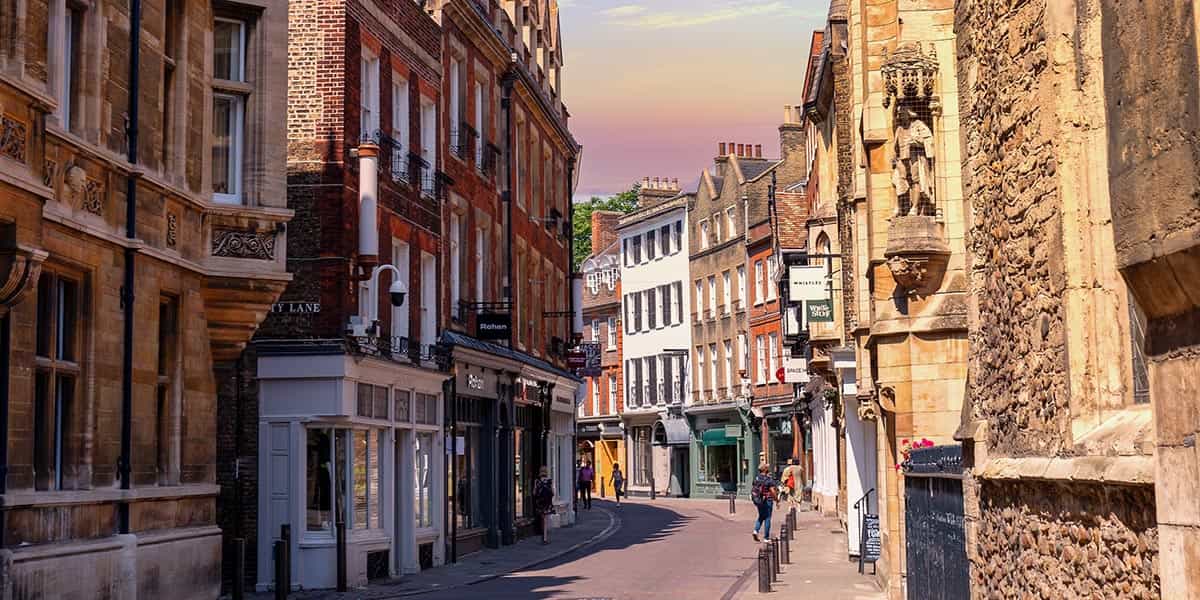
Harry Potter was not filmed in Cambridge, we're sorry to say. However, even though no wizards ever waved their wands here on camera, Cambridge still feels suspiciously magical. In fact, many of the most well known aspects of life at Hogwarts closely resemble regular student life at Cambridge University, likely influencing J.K. Rowling’s portrayal of Hogwarts. Gothic spires, crooked alleyways, and ancient college traditions make it easy to imagine how Hogwarts could be hiding in plain sight.You may not be able to catch the Hogwarts Express from King’s Cross; however, there is a 50-minute direct train to Cambridge, which might be the next best thing.
What Makes Cambridge Feel Like Hogwarts?
The Colleges
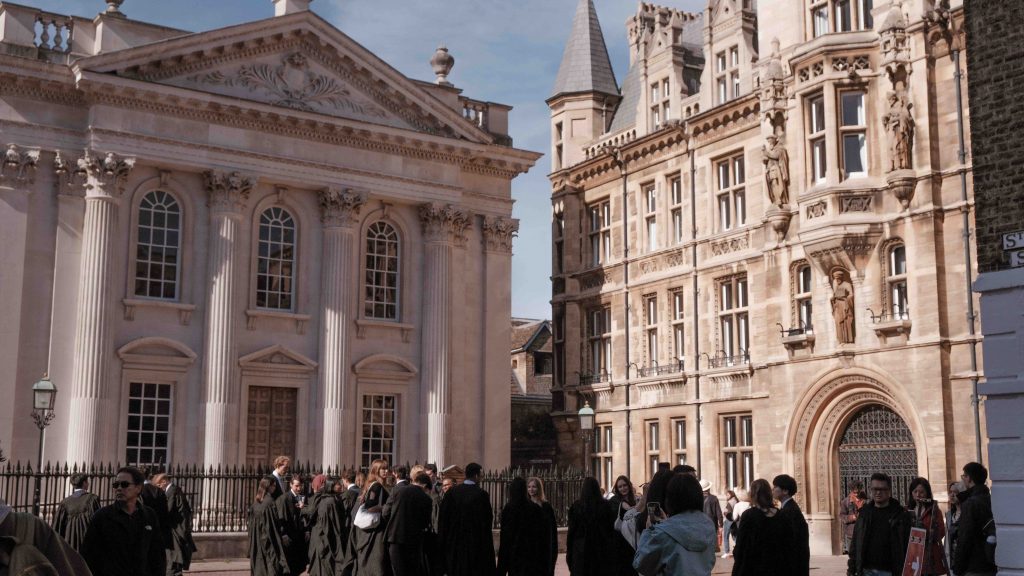
One of the strongest reasons Cambridge feels so familiar to Harry Potter fans is its collegiate system. There’s no Sorting Hat at Cambridge, but before the start of the first year, every student is assigned to 1 of 31 colleges, which becomes their academic and social home for the next three years
Over the years, each college has developed its own distinct culture,originating from the ideas and values of the initial college Masters. Each college has a set of colours, a unique crest, and long-standing traditions that new students must follow. Colleges often compete with one another in sports and academic achievements, creating a sense of rivalry and pride that wouldn't feel out of place at Hogwarts.
These colleges are spread throughout the medieval city, tucked between cobbled alleyways, old pubs, and quiet lanes that seem designed for wandering wizards. Many of these colleges are open to the public, offering plenty of opportunities for Harry Potter–inspired photo moments.
Formal Dinners
One of the most memorable features of Hogwarts life is the dining hall. Similarly, each college within Cambridge holds regular Formal Dinners, which closely resemble the dining experience at Hogwarts — minus the flying silverware.
The actual dining hall used in the Harry Potter films was at Christ Church College, Oxford. However, each Cambridge college is home to a similar hall, with wood-panelled walls covered in portraits of past scholars, professors, and patrons, where formal dinners take place.
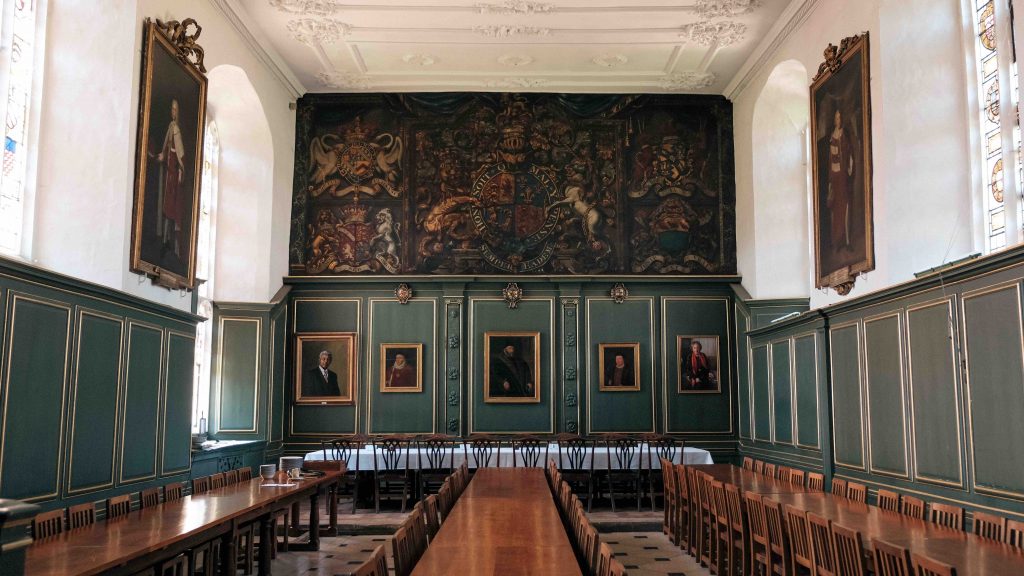
Formal dinners are often held by candlelight and begin with the formal announcement of the college professors, who sit at a high table and lead the meal with a Latin prayer. Academic gowns must be worn, with styles varying by college, faculty, and seniority.
Most college dining halls are closed to visitors; however, the halls at Pembroke College and Trinity College are sometimes open to the public.
Experience the Magic of Cambridge’s Architecture
Many of the college buildings at Oxford, where Harry Potter was filmed, were designed by the same architects responsible for some of Cambridge’s most iconic structures. With many buildings in both university towns constructed during the same era, and in some cases by the same architects, there are striking similarities between the real filming locations in Oxford and the magical atmosphere of the Cambridge colleges.
St.John’s New Court & Bridge of Sighs
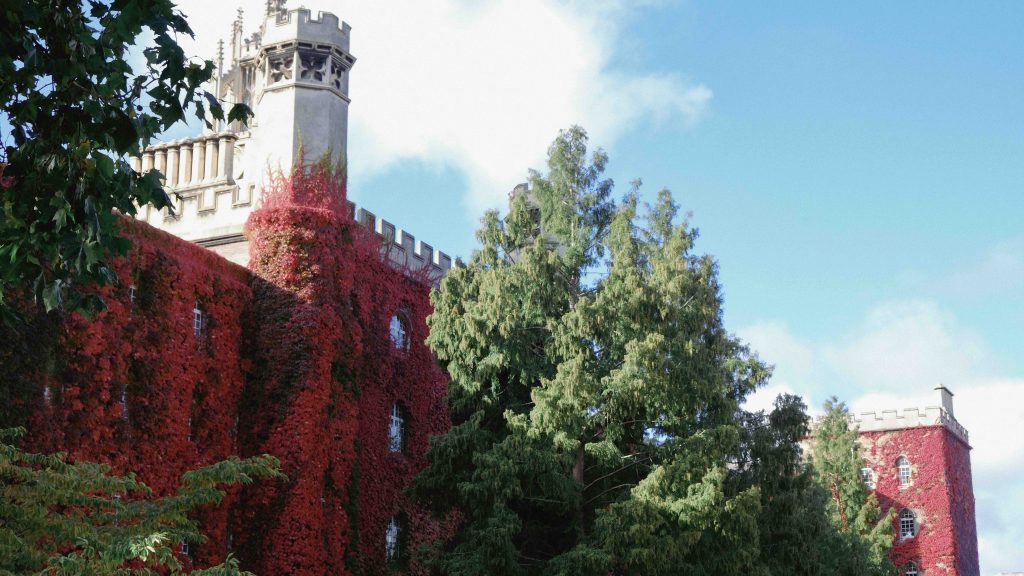
Often mistaken for Hogwarts—mainly due to a rumour spread by tour guides—the New Court building at St John’s is so convincingly magical that many visitors still assume Harry Potter was filmed here.
The New Court is connected to the older part of the college by the Bridge of Sighs, whose Gothic spires and architectural elegance further enhance the sense of magic throughout the college..
Trinity College and The Wren Library
The Large courts and stone façades of Trinity College are instantly recognisable to fans of the films.
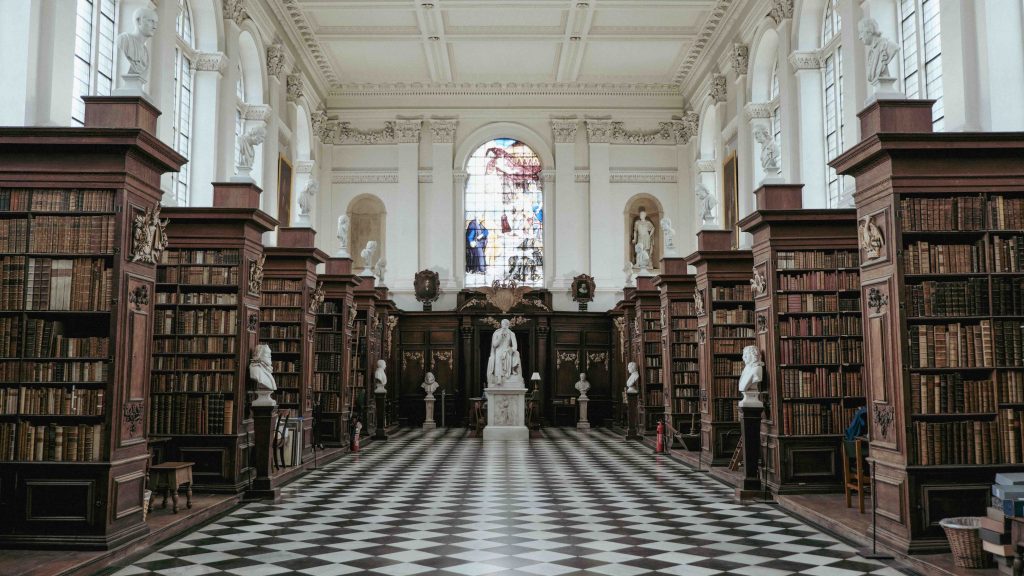
The Wren Library deepens that impression, with dark wooden shelves, historic interiors, and centuries-old books that feel as though spells and secrets might be hidden among the pages.
King's College Chapel
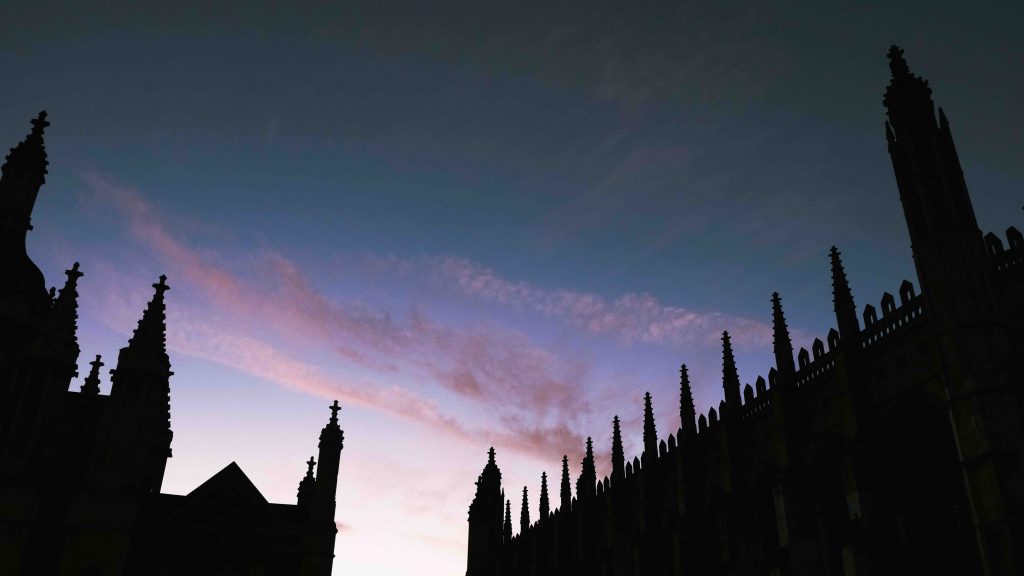
King’s College Chapel is one of the most memorable places to visit in Cambridge. During Evensong, the space fills with choral music that echoes beneath the vast stone ceiling, creating an experience that feels both peaceful and dramatic.
Rose Crescent and Green Street
Rose Crescent and Green Street are narrow, cobbled streets that curve gently away from Kings Parade. Lined with independent shops which feel tucked away and slightly secret. Harry Potter gift shops sit alongside cafés and boutiques to create a magical storybook atmosphere.
Harry Potter Actors with Cambridge Connections
Cambridge also has direct links to the Harry Potter cast. Emma Thompson, who played Professor Sybill Trelawney, studied English at Newnham College, Cambridge, and was a member of the Footlights comedy group.
Eddie Redmayne, who played Newt Scamander in the Fantastic Beasts films, studied History of Art at Trinity College, Cambridge. Together, these connections add another quiet layer to Cambridge’s relationship with the wizarding world.
Real Harry Potter Filming Locations
From Cambridge, it is easy to travel to many of the real Harry Potter filming locations elsewhere in the UK.
London
London also features heavily. King’s Cross Station became the gateway to Platform 9¾ and remains the same station offering a one-hour direct train to Cambridge. Elsewhere in the city, Leadenhall Market was transformed into Diagon Alley.
Oxford
Oxford played a key role. Christ Church College inspired the Hogwarts dining hall, with its staircase used directly in filming. The Bodleian Library appeared as the Hogwarts library, while the Divinity School next door became Hogwarts Hospital.
Durham
Durham Cathedral was used as Hogwarts classrooms and cloisters, its Romanesque architecture perfectly suited to the wizarding school.
Further north
Alnwick Castle provided Hogwarts exteriors, including the scenes where students first learned broomstick flying.
Scotland
The Scottish Highlands provided the backdrop for some of the most iconic scenes in the series. Glenfinnan Viaduct appears repeatedly as the route of the Hogwarts Express, while the dramatic landscapes around Fort William were used during the Triwizard Tournament. Nearby Loch Shiel featured in the memorable scene where Harry flies Buckbeak.
The Magic of Cambridge
Cambridge may not have been a filming location for Harry Potter, but its atmosphere feels unmistakably magical. With Gothic spires, candlelit Formal Dinners, ancient libraries, and centuries-old college traditions, the city closely mirrors many of the most iconic elements of Hogwarts. Visitors can wander cobbled lanes between historic colleges, admire enchanting architecture such as King’s College Chapel and St John’s Bridge of Sighs, and experience the timeless rituals of university life that seem lifted from the wizarding world.
Beyond its own spellbinding setting, Cambridge is perfectly positioned for fans eager to explore real Harry Potter filming locations across the UK, from King’s Cross Station in London to Oxford’s Christ Church College and the Scottish Highlands. Add in connections to cast members who once studied at Cambridge, and the city’s link to the wizarding world becomes even more compelling.
For travellers seeking history, beauty, and a touch of magic, Cambridge offers an unforgettable experience — no wands required.
[post_title] => Harry Potter In Cambridge [post_excerpt] => [post_status] => publish [comment_status] => closed [ping_status] => closed [post_password] => [post_name] => harry-potter-in-cambridge [to_ping] => [pinged] => [post_modified] => 2026-02-25 16:05:03 [post_modified_gmt] => 2026-02-25 16:05:03 [post_content_filtered] => [post_parent] => 0 [guid] => https://www.remember-cambridge.co.uk/?post_type=article&p=829 [menu_order] => 0 [post_type] => article [post_mime_type] => [comment_count] => 0 [filter] => raw ) 1 -->
-
Harry Potter In Cambridge